
Ovarian cysts are common and most are benign (non-cancerous). Many develop naturally as part of the menstrual cycle and disappear without treatment, while others may persist, grow or cause symptoms.
Importantly, not all ovarian cysts are the same. They range from functional and haemorrhagic cysts to benign ovarian tumours such as dermoid cysts and cystadenomas, and endometriomas associated with endometriosis. Less commonly, an ovarian mass may represent a borderline ovarian tumour or ovarian cancer.
The right approach depends not simply on the size of the cyst, but on its ultrasound appearance, your symptoms, age and menopausal status, fertility goals, and how the cyst changes over time.

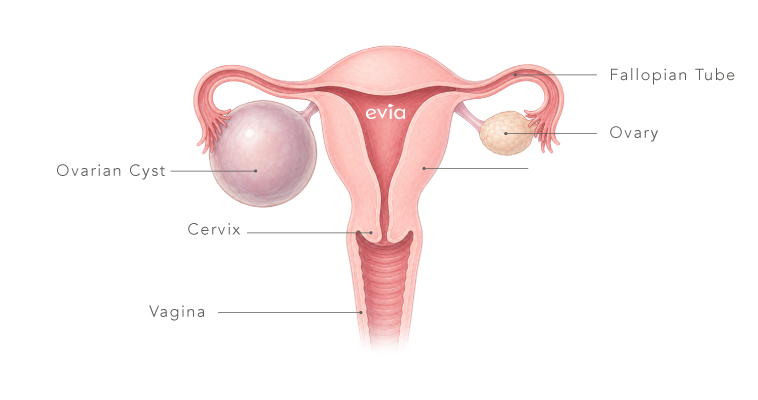
An ovarian cyst is a fluid-filled or partly solid structure that develops within or on the surface of an ovary.
Many ovarian cysts develop as part of normal ovulation and resolve naturally. Others arise from different types of ovarian tissue and usually do not disappear spontaneously.
Most ovarian cysts and masses are benign. Careful ultrasound assessment and sometimes further imaging such as MRI help determine the likely diagnosis and whether monitoring, further investigation or treatment is appropriate.
Functional cysts are the most common type of ovarian cyst and develop as part of the normal menstrual cycle.
They include:
Most cause few or no symptoms and resolve naturally within several weeks or menstrual cycles.
A haemorrhagic ovarian cyst occurs when bleeding develops within an ovarian cyst, most commonly a functional cyst such as a corpus luteum cyst.
They are common during the reproductive years and are usually benign. Many resolve naturally over several weeks, although they may sometimes cause pelvic pain.
Blood within the cyst can give it a complex appearance on ultrasound. Characteristic ultrasound features can often suggest the diagnosis, and a repeat ultrasound may occasionally be recommended to confirm resolution.
Rarely, a haemorrhagic cyst may rupture and cause significant bleeding into the abdomen (haemoperitoneum), resulting in sudden pelvic pain. This may require hospital assessment and monitoring, although surgery is not always necessary.
Dermoid cysts, also known as mature cystic teratomas, are usually benign ovarian tumours that develop from germ cells.
They may contain different mature tissues such as fat, hair, skin, teeth, cartilage or bone.
Dermoid cysts do not usually disappear spontaneously. Some remain small and stable, while others gradually enlarge. Larger dermoid cysts may cause pelvic discomfort and increase the risk of ovarian torsion.
Rarely, a dermoid cyst may rupture, and leakage of its contents into the abdomen can cause significant inflammation known as chemical peritonitis.
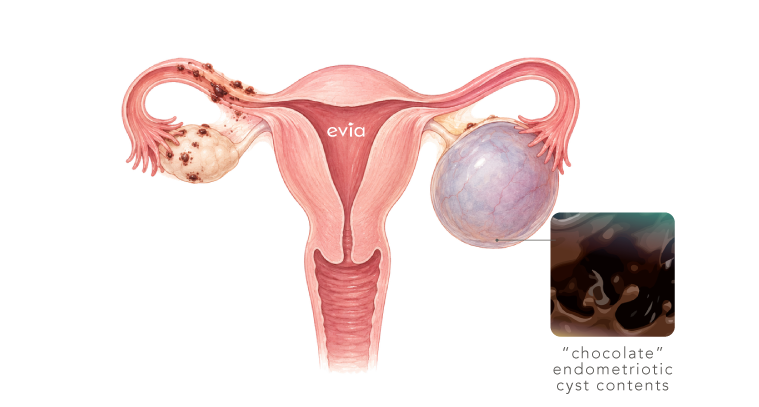
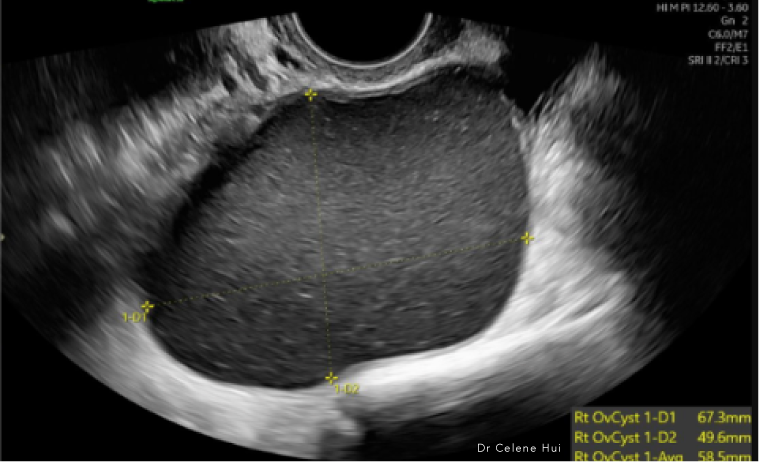
Endometriomas are ovarian cysts caused by endometriosis involving the ovary. They contain altered blood products and are sometimes known as “chocolate cysts” because of their characteristic appearance.
Women with endometriomas may also have superficial or deep endometriosis elsewhere in the pelvis and may experience painful periods, pelvic pain, pain during sexual intercourse or difficulty getting pregnant.
Not every endometrioma requires surgery. Endometriosis itself may affect ovarian reserve, while ovarian surgery can also result in loss or damage to healthy ovarian tissue.
The decision to monitor or remove an endometrioma therefore takes into account symptoms, cyst characteristics, fertility plans, ovarian reserve and previous ovarian surgery.
Cystadenomas are benign ovarian tumours.
The two common types are:
Unlike functional cysts, cystadenomas generally do not resolve spontaneously. Depending on their size, appearance and symptoms, they may be monitored or surgically removed.
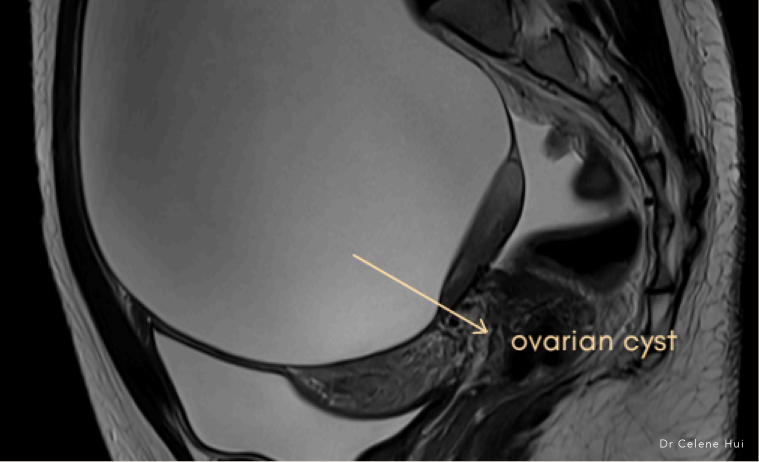
Other benign masses include ovarian fibromas, cystadenofibromas, paraovarian or paratubal cysts, hydrosalpinges and peritoneal inclusion cysts.
Ultrasound and, where appropriate, MRI can help determine where a mass originates and whether it has characteristic benign features.
Borderline ovarian tumours are uncommon epithelial ovarian tumours with abnormal cell growth but without the destructive stromal invasion seen in invasive ovarian cancer.
They are not the same as invasive ovarian cancer and generally have an excellent prognosis. However, appropriate surgery and follow-up are important because they can recur and, in some cases, involve other areas within the abdomen.
Borderline tumours can occur in younger women, and fertility-preserving surgery may be possible in selected patients after careful assessment and counselling.
A small proportion of ovarian masses are malignant.
The likelihood increases with age, particularly after menopause, although ovarian cancer can occur in younger women.
Ultrasound characteristics, together with clinical findings, tumour markers and sometimes further imaging, help assess the risk of malignancy.
Where an ovarian mass has suspicious features, referral to a gynaecological oncologist may be appropriate so that surgery can be planned and performed in the most appropriate setting.
Many ovarian cysts cause no symptoms and are discovered incidentally during an ultrasound or examination.
When symptoms occur, they may include:
Women with endometriomas may also experience symptoms of underlying endometriosis, including painful periods, chronic pelvic pain and pain with bowel movements during menstruation.
Most ovarian cysts do not cause infertility. Endometriomas are different because they occur in association with endometriosis, which may affect fertility and ovarian reserve.
Occasionally, an ovarian cyst can cause an acute complication.
Ovarian torsion occurs when the ovary twists around its supporting tissues, potentially reducing its blood supply. It typically causes sudden severe pelvic pain, often with nausea or vomiting. Urgent surgery may be required to untwist the ovary and preserve ovarian function where possible.
An ovarian cyst may also rupture or bleed. Many ruptured cysts can be managed conservatively, but significant bleeding may require hospital admission or surgery.
Seek urgent medical attention if you develop sudden severe pelvic pain, particularly with nausea, vomiting, dizziness, fainting or feeling acutely unwell.
Ovarian cysts are usually assessed with a pelvic ultrasound.
Your gynaecologist will consider:
Size alone cannot determine whether an ovarian cyst is benign or concerning.
Where appropriate, recognised ultrasound assessment systems can help estimate the likelihood that an ovarian or adnexal mass is benign or malignant. Additional investigations such as tumour markers or MRI may sometimes be recommended.
A specialist assessment is particularly useful if:
During your consultation, Dr Celene Hui will take the time to understand your symptoms, concerns and fertility goals. Where appropriate, this is followed by a pelvic examination and pelvic ultrasound.
Ultrasound helps assess the cyst and, importantly, determine what type of cyst or ovarian mass it is most likely to represent.
Further investigations such as blood tests, repeat ultrasound or MRI may be recommended where appropriate.
The aim is to determine whether your cyst can be safely monitored or whether treatment is needed and, if so, which option is most appropriate for you.

Treatment is individualised according to the type and appearance of the cyst, its size, symptoms, age and menopausal status, fertility goals and changes over time.
Many ovarian cysts do not require surgery.
Treatment may be considered when a cyst:
The decision to operate is based on the overall characteristics of the cyst and the individual patient, rather than a particular size cut-off alone.
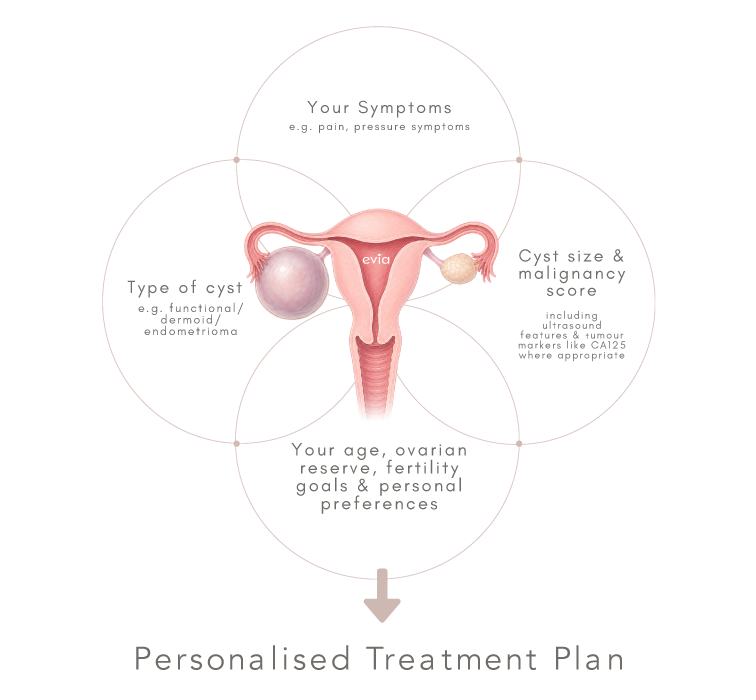
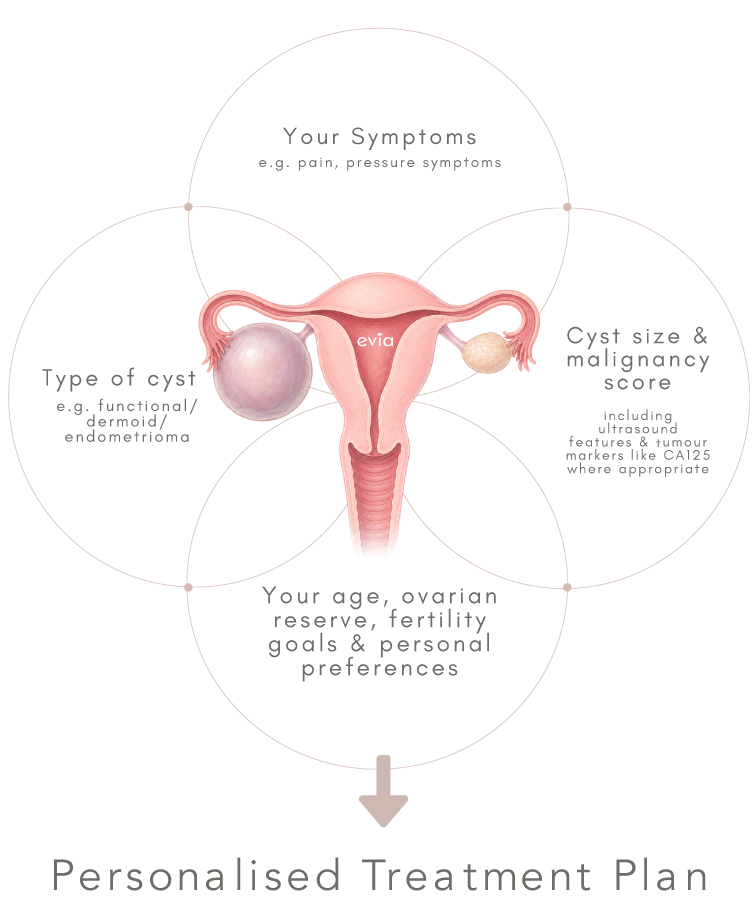
Functional and many haemorrhagic cysts resolve naturally. Other cysts with reassuring benign features and no significant symptoms may also be monitored with repeat ultrasound.
The frequency and duration of monitoring depend on the type and size of the cyst, its appearance, your age and menopausal status.
There is no medication that reliably makes most benign ovarian cysts disappear.
Hormonal contraception may reduce the development of new functional cysts by suppressing ovulation but does not treat dermoid cysts or cystadenomas.
For women with endometriomas, hormonal treatments such as progestogens may improve endometriosis-related symptoms and can sometimes reduce the size of the cyst. However, medical treatment does not provide a histological diagnosis and may be less suitable for larger, symptomatic cysts or those with concerning features. Women choosing conservative medical management should have regular follow-up and ultrasound monitoring.
For many women with endometriosis, hormonal treatment may also be recommended after ovarian cyst surgery to control the underlying endometriosis and reduce the risk of recurrence, particularly when pregnancy is not immediately desired.
When surgery is required, two decisions need to be considered: what operation is needed and which surgical route is most appropriate.
Where safely possible, particularly in younger women, an ovarian cystectomy removes the cyst while preserving the surrounding healthy ovarian tissue.
A salpingo-oophorectomy, which removes the affected ovary together with its fallopian tube, may instead be recommended when the cyst has replaced most of the normal ovarian tissue, the ovary is severely damaged, ovarian preservation is no longer beneficial, or the nature of the mass makes ovarian preservation inappropriate.
Surgery may be performed through laparoscopy, vNOTES, mini-laparotomy or open surgery, depending on the size and characteristics of the mass, the procedure required and the individual patient.
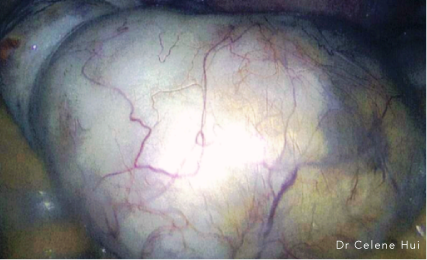
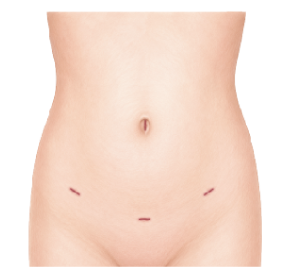
6cm ovarian dermoid cyst treated laparoscopically
Laparoscopy, or keyhole surgery, is the preferred surgical approach for many ovarian cysts and masses believed to be benign.
The procedure is performed through several small abdominal incisions using a high-definition camera and specialised surgical instruments.
Depending on the condition being treated, laparoscopic surgery may involve:
For younger women and those who may wish to conceive in the future, ovarian cystectomy is generally preferred whenever it is safe and appropriate.
The cyst is carefully separated from the surrounding ovarian tissue, with particular attention to preserving as much healthy ovary as possible. Gentle tissue handling and careful haemostasis are particularly important where preservation of ovarian reserve is a priority.
Compared with traditional open surgery, laparoscopy generally offers:
However, cystectomy inevitably involves operating on the ovary and can sometimes reduce ovarian reserve, particularly with endometriomas, bilateral cysts and repeat ovarian surgery.
For this reason, surgery should be recommended when there is a clear benefit rather than simply because a cyst is present.
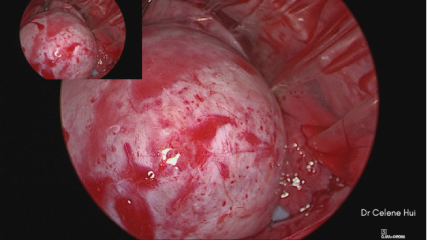
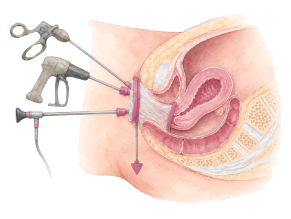
Ovarian cyst surgery performed via vNOTES
For carefully selected women with benign ovarian or fallopian tube conditions, vNOTES (vaginal natural orifice transluminal endoscopic surgery) provides another minimally invasive surgical approach without visible abdominal scars.
Instead of making abdominal incisions, a specialised endoscopic camera and surgical instruments are introduced through a small incision within the vagina to access the ovaries and fallopian tubes.
Depending on the condition being treated, vNOTES may be used to perform:
For appropriately selected patients, potential benefits include:
Not every ovarian cyst or adnexal mass is suitable for vNOTES. Suitability depends on the size and nature of the mass, pelvic anatomy, previous surgery, suspected adhesions or endometriosis and the operation required.
The choice between vNOTES and conventional laparoscopy is individualised according to the safest and least invasive approach for each patient.
Although minimally invasive surgery is preferred for many benign ovarian cysts, a mini-laparotomy or open surgery may sometimes be the safer or more appropriate approach.
Mini-Laparotomy
A mini-laparotomy uses a relatively small abdominal incision to provide direct access to the ovarian mass. Depending on the size and location of the mass, this may be performed through a low transverse (Pfannenstiel) incision or a short midline incision.
A mini-laparotomy may be considered for:
In some cases, a combined laparoscopic and mini-laparotomy approach may be used, preserving the benefits of laparoscopic assessment while allowing controlled removal of a large specimen through a small incision.
Open Laparotomy
A formal laparotomy involves a larger abdominal incision, which may be a midline or transverse incision depending on the operation required.
It may be recommended when:
The choice of surgical route is therefore based not simply on the size of the mass, but on its characteristics, suspected diagnosis, the procedure required and the safest way to remove it.
For women who may wish to conceive in the future, preserving healthy ovarian tissue is an important consideration before deciding on surgery.
Although ovarian cystectomy aims to preserve the ovary, surgery can sometimes reduce ovarian reserve. This is particularly relevant in women with:
For some women, careful monitoring may therefore be preferable to surgery. When surgery is necessary, the aim is to treat the cyst effectively while preserving as much healthy ovarian tissue as safely possible through meticulous surgical technique and careful haemostasis.
Dr Celene Hui is a board-certified Obstetrician & Gynaecologist and Level 3 accredited minimally invasive surgeon with more than 15 years of experience in women’s healthcare.
Her expertise includes minimally invasive surgery for ovarian cysts and other benign gynaecological conditions. Her approach begins with careful assessment to determine whether monitoring or surgery is most appropriate. When surgery is needed, the aim is to preserve healthy ovarian tissue wherever possible and select the least invasive approach that can safely and effectively achieve the desired outcome.
For women concerned about future fertility, ovarian reserve and reproductive goals are considered as part of treatment planning, particularly for endometriomas, bilateral cysts and previous ovarian surgery.

If you have been diagnosed with an ovarian cyst or are experiencing persistent symptoms, a specialist assessment can help determine the likely type of cyst and whether monitoring or treatment is needed.
At Evia Specialist Centre for Women, we offer a full range of evidence-based treatment options for ovarian cysts, with a particular focus on minimally invasive ovary preserving techniques where appropriate.
Every treatment plan is individualised, taking into account the type and characteristics of the cyst, your symptoms, age and stage of life, fertility goals and personal preferences, with the aim of choosing the safest and least invasive approach that is right for you.

No. Many ovarian cysts, particularly functional cysts, disappear naturally without treatment. Other benign-appearing cysts can sometimes be safely monitored.
Surgery is considered according to the type and appearance of the cyst, symptoms, changes over time, age, menopausal status and individual circumstances.
There is no single size at which every ovarian cyst needs to be removed.
Size is only one consideration. A small cyst with concerning ultrasound features may require further assessment, while a larger simple cyst with reassuring features may sometimes be monitored.
The type and ultrasound appearance of the cyst are therefore just as important as its measurement.
Yes. Functional ovarian cysts and many haemorrhagic functional cysts commonly resolve naturally within several weeks or menstrual cycles.
Dermoid cysts, cystadenomas and endometriomas generally do not disappear spontaneously.
Pelvic ultrasound provides important information about the likely nature of an ovarian cyst by assessing its internal appearance, solid and cystic components, walls, septations and blood flow.
Many ovarian masses have characteristic benign appearances. If the findings are uncertain or concerning, further assessment with repeat specialist ultrasound, blood tests or MRI may be recommended.
No imaging test can provide histological certainty in every case; definitive diagnosis is sometimes only possible after surgical removal and examination of the tissue.
No. The great majority of ovarian cysts are benign, particularly in premenopausal women.
However, some ovarian masses have ultrasound features that warrant further investigation. Assessment is particularly important for complex ovarian masses and masses detected after menopause.
A borderline ovarian tumour is an epithelial ovarian tumour with abnormal cell growth but without the destructive stromal invasion of invasive ovarian cancer.
Most have an excellent prognosis, but appropriate surgery and follow-up are important. Because they can occur in younger women, fertility-preserving treatment may be possible in selected patients.
Most ovarian cysts do not affect fertility.
Endometriomas (endometriotic or “chocolate” cysts) are associated with endometriosis and may affect both fertility and ovarian reserve. Women with endometriomas may have lower ovarian reserve, and the endometrioma itself may affect the surrounding healthy ovarian tissue.
Surgery on the ovary can also reduce ovarian reserve, particularly with repeated surgery or when both ovaries are involved.
This is why fertility goals and ovarian reserve should be carefully considered when deciding whether an endometrioma requires surgery.
An ovarian cystectomy removes the cyst while preserving the ovary.
An oophorectomy removes the entire ovary. When the fallopian tube on the same side is also removed, this is called a salpingo-oophorectomy. The tube is usually removed together with the ovary as keeping it generally provides no fertility benefit, while removal avoids future tubal problems and may also reduce the risk of certain ovarian cancers.
For benign ovarian cysts, particularly in younger women, ovarian preservation is generally preferred whenever it is safe and appropriate.
No. Most ovarian masses believed to be benign can be treated using minimally invasive surgery, either through conventional laparoscopy or, in carefully selected women, vNOTES.
A mini-laparotomy or open laparotomy may sometimes be more appropriate for a very large or predominantly solid mass, when safe specimen retrieval is difficult, or where there is concern regarding borderline or malignant disease.
The surgical approach is chosen according to the characteristics of the mass and the safest way to remove it.
Recovery depends on the complexity of the operation and the individual patient. Many women are discharged the next day or after a short hospital stay and gradually return to normal daily activities over the following weeks.
We will provide individualised postoperative advice according to the surgery performed.
Yes. Removing one ovarian cyst does not prevent a new cyst from developing in the future.
Recurrence depends on the type of cyst. Endometriomas, for example, may recur because they are associated with the underlying condition of endometriosis.
Seek urgent medical attention for sudden severe pelvic or abdominal pain, particularly if it is accompanied by nausea, vomiting, dizziness, fainting or feeling acutely unwell.
These symptoms can occur with ovarian torsion, cyst rupture or internal bleeding and require prompt assessment.
When an ovary is removed, the fallopian tube on the same side is usually removed as well. Keeping the tube generally provides no fertility benefit, and removing it reduces the risk of future tubal problems and may also reduce the risk of certain ovarian cancers.
CA125 is not recommended as a routine screening test for ovarian cancer in women without symptoms or an ovarian mass.
CA125 can be normal in some ovarian cancers, particularly in early-stage disease, and can also be raised in many benign conditions such as endometriosis, fibroids, menstruation and pelvic inflammation. A normal CA125 therefore does not exclude ovarian cancer, while an elevated result does not necessarily mean cancer.
CA125 is more useful when interpreted together with ultrasound findings, menopausal status and other clinical factors when assessing an ovarian mass.
Yes. An ovarian cyst or mass can increase the risk of the ovary twisting around its supporting tissues, known as ovarian torsion. This usually causes sudden severe pelvic pain, often with nausea or vomiting, and requires urgent medical assessment.