
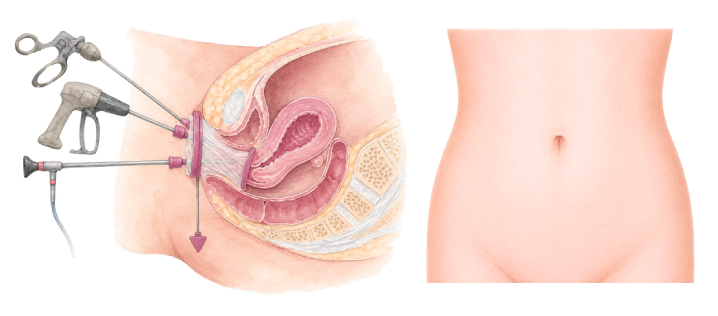
vNOTES: A minimally invasive single-port approach, with no abdominal incisions
vNOTES, or vaginal Natural Orifice Transluminal Endoscopic Surgery, is an advanced form of minimally invasive gynaecological surgery that allows selected operations to be performed through the vagina, without making incisions on the abdomen.
Using a specialised access platform, high-definition camera and laparoscopic instruments, the surgeon is able to operate within the pelvis in much the same way as conventional keyhole surgery. The difference lies in the route of access: instead of placing surgical ports through small incisions on the abdomen, vNOTES uses the vagina as a natural opening to reach the pelvic cavity.
For appropriately selected women, procedures such as hysterectomy, salpingectomy (removal of the fallopian tubes), salpingo-oophorectomy (removal of the ovary and fallopian tube) and selected ovarian cyst surgery can therefore be performed without visible abdominal scars.

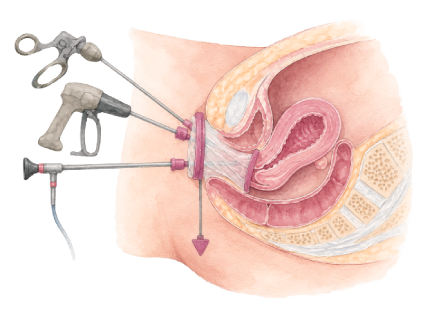
vNOTES stands for vaginal Natural Orifice Transluminal Endoscopic Surgery.
Natural orifice surgery uses an existing opening of the body rather than creating new incisions through the abdominal wall. In gynaecological surgery, the vagina provides a natural route to access the pelvic cavity.
During vNOTES surgery, an incision is made internally through the vagina and a specialised flexible access platform is inserted. Carbon dioxide gas is used to gently create working space, and a high-definition camera and laparoscopic instruments are introduced through this platform.
Both vNOTES and conventional laparoscopy are forms of minimally invasive surgery.
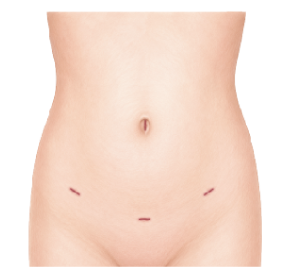
In conventional laparoscopic surgery, a camera and surgical instruments are inserted through several small incisions in the abdominal wall, usually including one at or around the umbilicus.
With vNOTES, endoscopic surgery is performed through the vagina instead. The camera and laparoscopic instruments are introduced through a single flexible access platform, avoiding the need to make incisions through the skin, fascia and muscles of the abdominal wall.
Traditional vaginal surgery also avoids abdominal incisions. However, it is performed without an endoscopic camera, which can limit the surgeon’s view and make structures higher within the pelvis more difficult to reach.
vNOTES adds magnified endoscopic visualisation and laparoscopic instrumentation to the vaginal approach. This provides a clearer view within the pelvis and improves access to structures such as the fallopian tubes and ovaries.
In this sense, vNOTES combines some of the advantages of vaginal surgery with those of modern laparoscopic surgery, while avoiding abdominal access.
A total hysterectomy is an operation to remove the uterus and cervix. It may be recommended for conditions such as symptomatic fibroids, adenomyosis, persistent heavy or abnormal uterine bleeding, or certain precancerous conditions when hysterectomy is considered the most appropriate definitive treatment.
During a vNOTES hysterectomy, the uterus and cervix are removed through the vagina. The fallopian tubes can usually be removed during the same operation, while healthy ovaries may be preserved when there is no medical indication for their removal.
A salpingectomy is an operation to remove one or both fallopian tubes.
It may be performed for a condition affecting the fallopian tube, such as an ectopic pregnancy or hydrosalpinx, as a method of permanent contraception, or together with another gynaecological operation.
Removal of both fallopian tubes may also be considered as an opportunistic risk-reducing procedure in women who have completed their families, as there is increasing evidence that many high-grade serous ovarian cancers originate within the fallopian tubes.
Using vNOTES, the fallopian tubes can be visualised endoscopically and removed through the vagina without abdominal port incisions.
A salpingo-oophorectomy removes an ovary together with its fallopian tube. Adnexectomy is a broader term referring to removal of the adnexa, usually the ovary and fallopian tube.
This may be recommended for a persistent or symptomatic ovarian mass, certain benign ovarian cysts, ovarian torsion, or when removal of an ovary is otherwise clinically indicated.
An ovarian cystectomy involves removing an ovarian cyst while preserving the remaining healthy ovary.
During vNOTES cystectomy, the cyst is carefully separated from the surrounding ovarian tissue, and the specimen is removed through the vaginal access route without abdominal port incisions.
The applications of vNOTES continue to evolve as surgical techniques and experience develop. The most appropriate route for any operation depends on the condition being treated, the procedure required and individual anatomy.
The main advantage of vNOTES is that it allows selected gynaecological operations to be performed without making incisions through the abdominal wall. However, the potential benefits extend beyond cosmesis.
Because surgical access is through the vagina, there are no abdominal scars.
For some women, this cosmetic benefit is important. However, avoiding abdominal incisions also means avoiding the discomfort and potential complications associated with wounds through the abdominal wall.
Although laparoscopic surgery uses only small abdominal incisions, these still pass through the skin, fascia and muscles of the abdominal wall and can contribute to pain after surgery.
vNOTES avoids these abdominal incisions altogether. Surgical access is instead through the vagina, where discomfort tends to be duller and less localised than the sharper pain associated with an abdominal wound.
Randomised studies comparing vNOTES with conventional laparoscopy have reported less postoperative pain and/or reduced need for pain medication following both hysterectomy and adnexal surgery.
This can make the first few days after surgery more comfortable and support earlier mobilisation.
Without abdominal wounds, many women find it more comfortable to get out of bed, walk and move around soon after surgery.
At Evia Specialist Centre for Women, minimally invasive surgery is combined with an Enhanced Recovery After Surgery (ERAS) approach, including good pain control, early mobilisation, early return to eating and drinking, prevention of nausea and blood clots, and a gradual return to normal activity.
The aim is not simply to leave hospital sooner, but to support a safe, comfortable and smoother recovery after surgery.
Because vNOTES does not require abdominal incisions or ports, it avoids complications specifically related to these wounds, such as wound infection, wound separation and port-site hernia.
It also avoids the abdominal entry step required during conventional laparoscopy, which carries a small but recognised risk of injury to underlying organs or blood vessels.
vNOTES has its own recognised risks, but avoiding abdominal entry removes one potential source of surgical injury.
During your consultation, Dr Celene Hui will take the time to understand your condition, symptoms and goals, and talk you through the surgical approaches available to you.
Where appropriate, a pelvic examination and imaging will help assess your suitability for vNOTES specifically, alongside other minimally invasive options.
The aim is to recommend the approach that can safely and effectively achieve your required outcome, with the least unnecessary trauma to your body.
For the surgeon, vNOTES offers a different view and working angle compared with conventional laparoscopy.
The bottom-up approach brings the endoscopic camera directly into the pelvis and close to the surgical field, providing a highly magnified view of the pelvic structures. This can be particularly useful when operating around the uterus, fallopian tubes and ovaries.
During hysterectomy, vNOTES also allows the uterine blood supply to be approached from below and the uterine arteries to be controlled relatively early in the operation.
Another potential advantage is that vNOTES can often be performed using lower pneumoperitoneum pressures and less steep Trendelenburg positioning than conventional laparoscopy. This may be helpful for selected patients in whom prolonged steep head-down positioning or higher insufflation pressures are less desirable.
The flexible vaginal access platform also provides a different degree of freedom for instrument movement compared with instruments passing through fixed abdominal port sites.
These technical characteristics do not make vNOTES inherently superior for every operation, but they can offer important advantages in appropriately selected cases.
Current evidence supports vNOTES as a safe and effective minimally invasive approach in appropriately selected patients, when performed by surgeons trained in the technique.
In one of the largest prospective studies of 1,000 women undergoing vNOTES for benign gynaecological conditions, conversion to another surgical approach was uncommon at 0.4%, with an overall complication rate of 3.9%.
As with any operation, complications can occur, including bleeding, infection or injury to surrounding structures. There are also the general risks associated with surgery and anaesthesia. Your individual risks depend on the procedure being performed, your medical history and previous surgery, and these will be discussed with you before your operation.
Safety always takes priority over the surgical route.
The surgical approach is therefore reassessed at the time of surgery. If examination under anaesthesia or findings during the operation suggest that vNOTES is no longer the safest approach, your surgeon may change to conventional laparoscopy. This remains a minimally invasive approach and is an important safety option when needed.
Open abdominal surgery is generally reserved for situations where it becomes necessary for safety.
Many women requiring surgery for benign gynaecological conditions may potentially be suitable for vNOTES, but careful assessment and patient selection are important.
Suitability depends on the operation required, the size and mobility of the uterus, the nature of any ovarian or tubal abnormality, previous surgery including Caesarean section, the presence of pelvic adhesions or endometriosis, vaginal access and whether there is any concern about malignancy.
A careful pelvic examination and transvaginal ultrasound by your vNOTES surgeon are particularly useful when planning surgery. These allow assessment of vaginal access, uterine mobility and possible adhesions or obliteration of the pouch of Douglas. Additional imaging such as MRI may be recommended when further assessment of the pelvis is required.
Each case is considered individually.
vNOTES may not be appropriate when there is concern that vaginal entry into the pelvis would be difficult or unsafe.
Contraindications to the vNOTES approach may include active pelvic or lower genital tract infection, suspected significant pelvic adhesions, severe or deep rectovaginal endometriosis, previous pelvic radiotherapy, pregnancy, and situations where malignancy is suspected and another surgical approach would allow more appropriate assessment or treatment. Previous rectal surgery may also make vNOTES unsuitable because of the possibility of altered anatomy or adhesions.
Other factors do not necessarily exclude vNOTES but may make the procedure more technically challenging. These include no prior vaginal intercourse, previous Caesarean sections, a very narrow vaginal canal, limited vaginal access or other anatomical factors. Obesity itself is not considered a contraindication to vNOTES, although overall surgical suitability still needs to be assessed individually.
Safety remains the priority. A careful pre-operative assessment by your vNOTES surgeon, including pelvic examination and imaging where appropriate, is important in deciding whether this route is suitable for you.
Suitability also depends on the particular operation required, your individual anatomy and previous surgical history, and the surgeon’s training and experience with vNOTES.
There is no single minimally invasive approach that is best for every woman.
Both vNOTES and conventional laparoscopy allow gynaecological surgery to be performed using a camera and specialised instruments rather than a large abdominal incision.
For appropriately selected procedures, vNOTES offers the additional advantage of avoiding abdominal entry and has been associated in randomised studies with benefits including reduced postoperative pain, reduced analgesic requirements, shorter operating times and/or shorter hospital stays.
However, the most appropriate route depends on the condition being treated, the surgery required and individual anatomy.
At Evia Specialist Centre for Women, our aim is to choose the minimally invasive approach that allows us to perform the operation safely and effectively, while minimising unnecessary surgical trauma. Each surgical plan is carefully individualised to the patient, rather than applying the same approach to everyone.
Because there are no abdominal incisions, many women find getting out of bed, walking and moving around more comfortable during the early recovery period. Randomised studies have also reported less postoperative pain and reduced need for pain medication compared with conventional laparoscopy.
However, vNOTES is still surgery and internal healing takes time. Some pelvic discomfort, light vaginal bleeding or discharge and tiredness can be expected during recovery.
How quickly you return to work, exercise and normal activities will depend on the procedure performed and your individual recovery.
You will receive personalised post-operative instructions regarding wound care, activity, lifting, exercise, driving and when it is safe to resume sexual intercourse.
At Evia Specialist Centre for Women, the aim of minimally invasive surgery is to achieve the necessary surgical outcome while reducing unnecessary trauma to the body wherever this can be done safely.
Dr Celene Hui is a Level 3 accredited minimally invasive gynaecological surgeon with experience across a range of surgical approaches, including hysteroscopy, conventional laparoscopy, vNOTES and mini-incision surgery. She has completed vNOTES certification through the International NOTES Society and has published on vNOTES surgical techniques together with Professor Jan Baekelandt, a pioneer in the development of vNOTES surgery.
Having different surgical approaches available means that treatment can be individualised according to the woman and her condition, rather than applying the same operation or surgical route to every patient.
Where vNOTES is suitable, it offers a highly minimally invasive route to surgery without abdominal incisions. Where another approach is more appropriate, this will be discussed with you.
The goal remains the same: safe and effective surgery, with your recovery and long-term health in mind.

If you have been recommended surgery and are unsure whether vNOTES may be suitable for you, you may wish to seek a second opinion.
Dr Celene Hui can review your diagnosis, previous surgery and imaging, assess your suitability for vNOTES, and discuss the different minimally invasive surgical options available to you.
The aim is to help you understand your options and make an informed decision about the surgical approach that is most appropriate for you.
If you have been recommended gynaecological surgery, understanding the different approaches available can help you make a more informed decision about your care.
During your consultation, Dr Celene Hui will review your condition, symptoms, imaging, medical and surgical history, and discuss the treatment options that may be suitable for you.
With expertise across a range of minimally invasive approaches, including vNOTES, laparoscopy and hysteroscopy, your surgical plan is tailored to your condition and individual anatomy.
Our aim is simple: to choose the least invasive approach that allows your surgery to be performed safely and effectively, with your recovery and long-term health in mind.

Not exactly. Both use the vagina as the surgical route and avoid abdominal incisions. However, vNOTES uses a high-definition endoscopic camera and laparoscopic instruments, providing a magnified view inside the pelvis.
This also improves access to the fallopian tubes and ovaries, which can be more difficult to reach during conventional vaginal surgery.
vNOTES leaves no visible abdominal scars because surgical access is through the vagina. There is an internal vaginal incision which is closed with dissolvable sutures.
For a total hysterectomy, an incision at the top of the vagina is required regardless of whether the hysterectomy is performed laparoscopically, open or by vNOTES, because the uterus and cervix are removed and the vaginal vault subsequently closed.
vNOTES can be used for hysterectomy and a range of adnexal procedures, including salpingectomy, salpingo-oophorectomy or adnexectomy, and selected ovarian cystectomies.
The range of procedures that can be performed through vNOTES continues to evolve as surgical techniques and experience develop.
Not for every patient.
Randomised studies have shown vNOTES to be an effective alternative to conventional laparoscopy for hysterectomy and adnexectomy in appropriately selected women, with benefits including reduced postoperative pain, reduced analgesic use, shorter operating times and/or shorter hospital stays.
The most appropriate approach nevertheless depends on the operation and the individual patient.
Current evidence does not establish that vNOTES is universally safer than conventional laparoscopy.
Both are minimally invasive approaches with recognised benefits and risks. Appropriate patient selection and surgeon training and experience are particularly important.
Not having had a vaginal delivery does not automatically exclude vNOTES, although vaginal access may be narrower and surgery can be more technically challenging.
Suitability depends on individual anatomy and the procedure required. A pelvic examination and transvaginal ultrasound are particularly useful for assessing vaginal access, uterine mobility and possible adhesions before surgery.
Yes, in selected women.
A previous Caesarean section does not automatically rule out vNOTES. However, Caesarean delivery can be associated with adhesions, particularly between the bladder and uterus, and this needs to be considered during pre-operative assessment and surgical planning.
Yes. For women who require hysterectomy for symptomatic fibroids or adenomyosis, vNOTES hysterectomy may be an option.
Uterine size and mobility, previous surgery and other pelvic conditions are considered when assessing suitability.
Yes. Selected ovarian cysts that have been assessed as benign may be removed using vNOTES ovarian cystectomy while preserving the remaining healthy ovary.
The cyst’s size, type and location, ovarian reserve, presence of endometriosis or adhesions and risk of malignancy are considered when deciding on the most appropriate surgical approach.
Yes. One or both fallopian tubes can be removed using vNOTES.
This may be performed for tubal disease such as hydrosalpinx or ectopic pregnancy, for permanent contraception, or together with another gynaecological operation.
Yes. Having a hysterectomy does not automatically mean that your ovaries need to be removed.
In many premenopausal women undergoing hysterectomy for benign conditions, healthy ovaries can be preserved. Whether your fallopian tubes or ovaries should also be removed will be discussed with you before surgery.
Sexual function can potentially be affected after any gynaecological surgery, although persistent sexual problems following vNOTES appear to be uncommon. The effect also depends on the operation performed and the underlying condition being treated.
Because vNOTES involves an internal vaginal incision, vaginal intercourse should be avoided while the area heals. Your surgeon will advise you when it is safe to resume intercourse based on the procedure performed and your recovery.
Recovery depends primarily on the operation you have undergone.
Many women find the early recovery more comfortable because there are no abdominal wounds, but internal healing still takes time. Your surgeon will advise you individually regarding return to work, exercise, lifting, driving and sexual intercourse.
Occasionally, examination under anaesthesia or findings during surgery may show that continuing through the vNOTES route is not the safest option.
In most situations, the next step is conversion to conventional laparoscopic surgery, which is still minimally invasive. Open abdominal surgery is reserved for situations where it is necessary for safety.
Changing the surgical route is not a failure of vNOTES. It is an important part of safe surgical decision-making.
Suitability cannot be determined from the diagnosis alone.
Your vNOTES surgeon will consider your symptoms and medical and surgical history, perform a careful pelvic examination and, where appropriate, a transvaginal ultrasound to assess your anatomy, uterine mobility and possible adhesions.
Existing ultrasound or MRI imaging, previous operations and the exact procedure required will also be reviewed.
This allows the surgical approach to be personalised to you rather than simply to your diagnosis.